



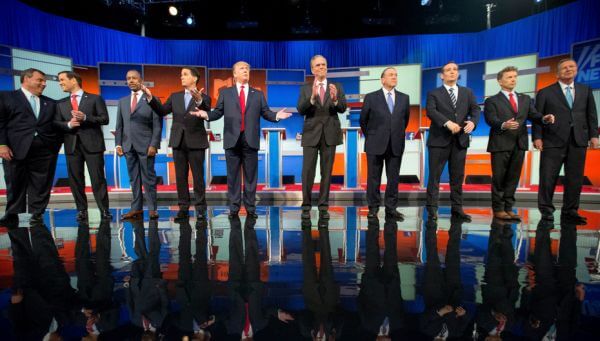
 I posted this piece to my Forbes.com blog. The premise: once your start narrowing the field of 17 Republican presidential candidates, there are arguably five with the potential to move the party in a different direction — in doing so, easing the GOP into a post-Reagan identity that’s eluded Republicans since the end of the Cold War. I deliberately left the three three non-officeholder candidates – Donald Trump, Ben Carson and Carly Fiorina – out of this conversation. Each has had a good summer, but each also faces questions as to whether their respective surges can last.
My five choices:
- Jeb Bush. How would a Bush 45 presidency alter the GOP? Obviously, there’s the emphasis on Latino outreach, but don’t overlook Bush’s willingness to move a wee bit on items like climate change. As such, he’s a continuation of what the liberal historian Sean Willientz calls “modern Republicanism” – in the tradition of Thomas Dewey and the previous two Bushes, trying to soften the party’s conservative edges.
- Scott Walker. Where Walker breaks with the field: the ability, for the son of a small-town Baptist minister, to be “pastoral” in much the same way that Reagan was able to channel faith into a larger conservation about values and principles (remember, it worked for Mike Huckabee in Iowa in 2008).
- John Kasich. Ohio’s governor immodestly told The New York Times: “Hopefully, in the course of all this, I’ll be able to change some of the thinking about what it means to be a conservative.” Kasich seems to be representing an updated version of Bush 43’s “compassionate” message – emphasizing, as Kasich likes to put it, “people in the shadows.”
- Marco Rubio. The Florida senator would be all of 45 at the time of next year’s national convention. Not that Rubio would bring a complete set of Gen-X sensibilities to the race (the media will note this ad nauseam), but he would be able to speak peer-to-peer to the non-AARP sector of the electorate on matters like child-rearing, college-savings and caring for aging parents – something new for a GOP accustomed to 60- and 70-something nominees.
- Ted Cruz. The Texas senator is a quiet third in the latest Fox News poll (one point ahead of Bush, two points behind Ben Carson), and of late doing something even quieter: mounting a clever but stealthy campaign across the Deep South (20 stops, 2,000 miles across “Cruz Country – i.e., states participating in next March’s “SEC Primary”). Cruz has raised the most hard money in this campaign; his may be the one candidacy most dead set on realizing the Tea Party’s dream of ending the culture of big government and over-spending.
There’s my “starting five.” Your thought as to which, if any, goes the distance?


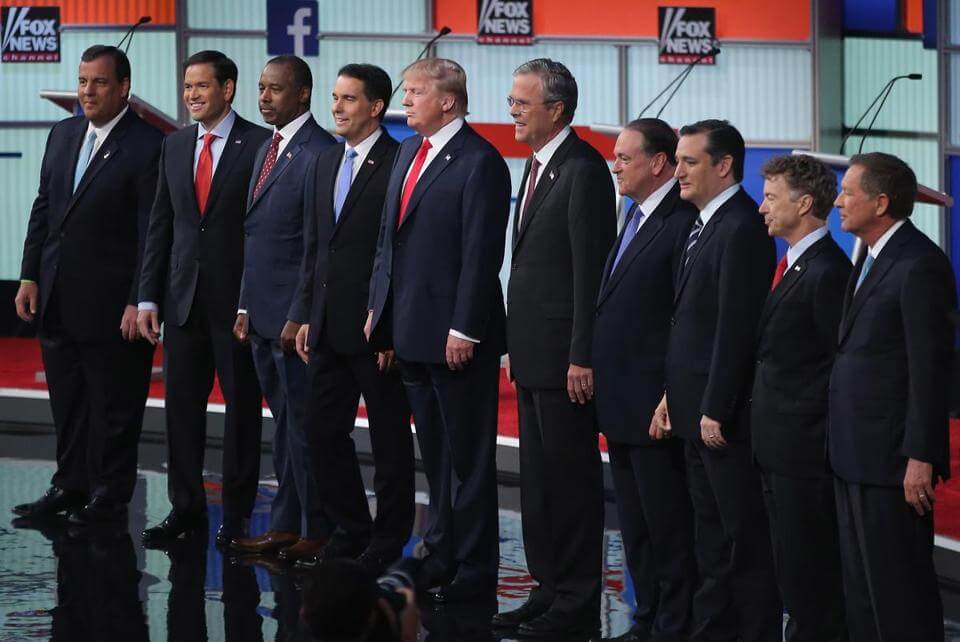 With a record 24 million people watching the GOP debate, you’d think there would have been a lot more time spent on the most important issue of the day: the economy. Look at any poll. Jobs and the economy are always at the top of the list. But there was barely a mention of this on Thursday night.
 A statesman is allowed the occasional crime against humanity, but he’s damned for his unforced errors.* Nixon was driven from office not for the questionable bombing of Cambodia, but third-rate burglary gone wrong at the Watergate. Clinton was impeached not for bombing aspirin factories, but for the Lewinsky mess.
 Now that Scott Walker’s in the race, with John Kasich on tap for next week, the GOP’s 2016 field soon will total 16 presidential candidates. We can rank them, 1-16. Or go by tiers. Or pick names out of a hat. My choice: divide the field into four brackets, four candidates apiece, which I’ve done in
  As we approach the end of the week, it’s a good time to ask which of these stories from the past several days means the most to the Republican presidential field. These would be both short-term and long-term considerations. In the short term: the August 6
 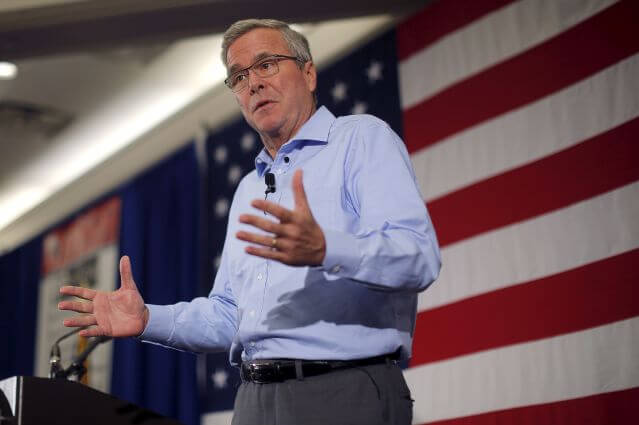 It was hot yesterday in Palo Alto. Well, mid-to-upper 80s with little in the way of a breeze, which may sound laughable depending on where you’re reading this. But it felt downright Dante-esque here in Northern California given that most of our May seemed overcast and unseasonably cool. I won’t take the coward’s way out and blame the heat for this evergreen story — vice-presidential speculation. What got me thinking about it was
 June having dawned, we’re beginning to get a decent sense of what the (enormous) GOP presidential field is going to look like. By my tally, we’re probably going to end up with approximately 15 relatively prominent candidates. That’s four sitting governors — Christie, Kasich, Jindal, and Walker; four former governors — Bush, Huckabee, Pataki, and Perry; four sitting senators — Cruz, Graham, Paul, and Rubio; Santorum, the lone former senator; and the two who’ve never held elected office, Carson and Fiorina. I know everyone’s focused on how you get all these people onto one stage, but I’ve been thinking about another dynamic: there are 14 people in that group who aren’t going to be the Republican nominee. What do they do next? Here are my thoughts for each of these candidates should they fail to win the big prize. Add yours in the comments.
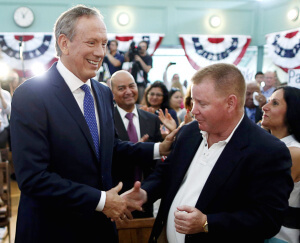 The GOP presidential field continues to swell like Elvis’ waistline in the 1970s. Former New York Governor George Pataki jumped into the fray on Thursday, a day after former Pennsylvania Senator and 2012 contender Rick Santorum
  Ohio Governor John Kasich
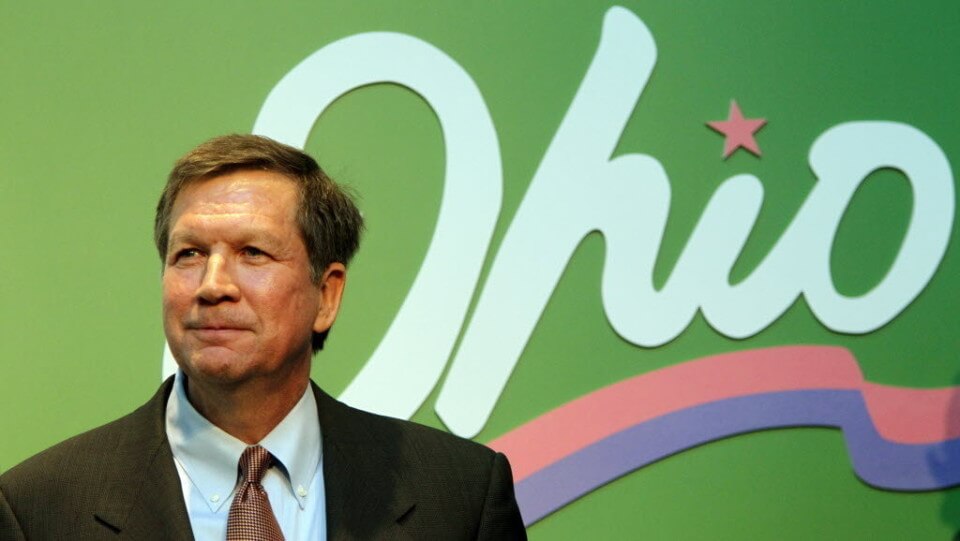 I live in Ohio, where Gov. John Kasich just won reelection by a landslide against a scandalized opponent. I know he’s been mentioned as a possible candidate, but I’ve always discounted him out of complete indifference.