













































Get the Ricochet app
Ricochet will work fine in a browser on your mobile devices, but for the best experience please download our app.


Ricochet will work fine in a browser on your mobile devices, but for the best experience please download our app.
Tired of the toxicity of social media? Why not join Ricochet for just $5/month? Think of it as an online bar. Come in, have a drink, hang out, say whatever you want. But don’t badger, bully, or berate the other drinkers. That's our only rule.
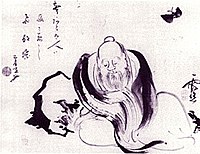
I wrote an article about how the philosophers Zhuangzi, Plato, Martin Heidegger, and C. S. Lewis can give us some good advice about the dangers of using AI in academic writing. It's open-access here. I'll borrow a few quotes below.
Using AI in our writing can bring some benefits, such as the ability to produce (somewhat) reliable summaries of large blocks of text in an instant. But what is it, like all the other writing technologies, taking away? If we’re not careful, AI writing trains us to follow preexisting patterns of words with minimal comprehension.
Observations of student submissions reveal notable changes following the introduction of ChatGPT. Turnitin similarity scores have generally decreased, while the overall quality of English grammar in written assignments has improved. But I often find in student assignments piles of information consistent with easily accessible internet material, with little to no evidence of conscious interaction with course content. My students are accumulating information with no knowledge.

Plato teaches us not to let technology substitute for the necessary work of human thought, producing more information with less comprehension. Students daily are using AI-writing to produce more information faster, but with less input from their own minds and less understanding. Heidegger warns us to not reduce ourselves to parts of a machine creating products. Academic writing should be a process of people using their writing tools to shape a little bit of the world. It should not be a process that uses people to create a product. Students are now letting AI create their writing, surrendering to an algorithm their own role as shepherds of the process. Zhuangzi urges us to not follow social convention, but AI-writing all too often takes social conventions as manifested on the internet and distills them into a neat little package. And Lewis says that we destroy our own humanity when we use powerful technology to get what we want without first learning to want what is good. AI-writing sacrifices the human love of discovering and understanding the truth, submitting our words to conditioning by someone who wrote some algorithms.
These great philosophies warn us that the use of AI in writing can steal a piece of our humanity from us. A character in Star Trek: Insurrection, probably the most Daoist of Star Trek productions, introduced the idea well enough: “We believe when you create a machine to do the work of a man, you take something away from the man” (Frakes, 1999).
How should we proceed with this information? The first step is to develop an awareness of the situation. Perhaps the strongest protection against losing some of ourselves to a careless use of this new technology is simply to recognize the value—the objective value, Lewis reminds us—of what is at risk. A human being, and some hard work by that human being in learning for himself to think and to communicate well—those things matter.
This post was promoted to the Main Feed at the recommendation of Ricochet's members.

Discussion (36)
To read this bio, please join Ricochet.
To read this bio, please join Ricochet.
This teacher's examples of student AI cheating are very familiar.
Since the PDF of my article doesn't do the blockquotes properly, here's one of my examples with my brief commentary:
I will let one more long example pass with little comment. The question was “What does Nietzsche say about Christianity and otherworldliness?” The student’s answer recycles, with minimal clarity, a lot of general information available online and gives no hint of interacting either with the reading or with the simple explanation in class notes. The unusually good grammar and American spelling (in Hong Kong!) only help to confirm that the student did little work and learned little:
Why-oh-why would it seem like a good idea to let a piece of technology reconstruct everyone else’s thought patterns in a person’s own writings?
CHARTER MEMBER
To read this bio, please join Ricochet.
The value of a tool depends on the skill of its wielder.
Except for two-man saws. Generally, it's all you can do to not throttle the guy at the other end.
To read this bio, please join Ricochet.
Now there is philosophy I can get behind.
CONTRIBUTOR
To read this bio, please join Ricochet.
I find that surprising. Is it really that hard not to throttle the guy when you've got eight feet of sharpened steel right there?
You're seeing five of 36 comments. Sign in, or join for just $5 per month, to read them all and add your own.