













































Get the Ricochet app
Ricochet will work fine in a browser on your mobile devices, but for the best experience please download our app.


Ricochet will work fine in a browser on your mobile devices, but for the best experience please download our app.
Tired of the toxicity of social media? Why not join Ricochet for just $5/month? Think of it as an online bar. Come in, have a drink, hang out, say whatever you want. But don’t badger, bully, or berate the other drinkers. That's our only rule.
I made a short series of videos considering questions about G-d that I have noticed get asked from time to time. Below is a rewriting based on the script for the first video, followed by the video itself.
I hardly know what to say about this question, but it does come up sometimes, and it needs a response. It seems to arise in response to cosmological arguments for the existence of G-d. The response “Who made G-d then?” seems to be a sort of "Gotcha!" response. Or maybe it’s an honest question.
Either way, it’s based on a serious misunderstanding of arguments like this. These arguments don’t say that everything needs a cause. They say that things that do need a cause have one.
G-d does not need a cause. G-d is the Uncaused Cause, the Unmoved Mover, the Uncreated Creator.
Now you can say that you think there is no such thing as an Uncaused Cause, and hopefully explain why you think that. But there’s no point asking who created the Uncreated Creator or who caused the Uncaused Cause. It’s a little bit like asking why 3 is a bigger number than 17, or who put all the right angles in a circle.

The first thing is just to understand what Christians (or other classical theists) are talking about when we talk about G-d as the Uncaused Cause. One good way of putting this is: Most things are caused, and everything that’s caused needs an explanation, and there is no explanation unless there is something that is not caused.
Another good way of putting it is: Everything needs an explanation. Most things need something else to explain them, but the First Cause or the Uncaused Cause is His own explanation.
And the second thing is to understand why we think this way. In terms of biblical history and ancient literature, the idea of G-d as the Uncreated Creator comes originally from the Torah. “In the beginning G-d created the heavens and the earth.” G-d creates by speaking. He has that kind of power. “Let there be light. And there was light.” He is not creating out of any preexisting matter, like the gods in creation myths of the polytheistic religions of the cultures by which the ancient Hebrews were surrounded.
And He is not Himself a being who comes with a past, a beginning, a backstory like the gods of those creation myths tend to.
And in terms of philosophy, or philosophical theology, there are only a few ways we could possibly try to explain cause and effect.
There are chains of causality—me, my parents, their parents, and so on. We could say that these chains go on infinitely into the unlimited past. But then there’s no explanation for anything, because every explanation has to come from somewhere, and it can’t come from anywhere if it never begins anywhere. My parents can’t explain me unless they are explained. If there is no beginning to the chain of cause and effect, nothing is explained: Every supposed explanation is based on the link in the chain before it, but ultimately based on nothing at all, so that nothing is actually explained.
Let me try another way of saying this: My parents cannot explain me unless they are explained, and they cannot be explained unless their parents are explained, and so on. Nothing in a chain of cause and effect is explained except by an explanation that gets passed on from one link to the next. But if every link in the chain needs an explanation, then no link in the chain has one.
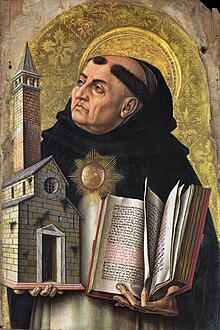
This is the sort of thing Thomas Aquinas is thinking of when he talks about G-d as the First Cause in the beginning of his Summa Theologiae.
It’s a little bit like changing some Hong Kong dollars for some US dollars, changing them for Pakistani rupees, changing them for Kenya shillings, changing them for Emirati dirham, changing those for South African Rand, and continuing indefinitely without ever expecting to change any currency at all for any gold, or even using it to buy a Coca-Cola.
And there are other issues with talking about infinite sets of causes, or scientific evidence that the universe had a beginning such that there was not an infinite amount of time for this to happen in anyway.
Those are all concerns with saying there is an infinite chain of causes.
What are our other options? Well, we could try saying that there is something which is the Cause of Itself, but this makes no sense either. It can’t be caused unless it is not there yet, but it can’t cause itself unless it is there. So nothing is the Cause of Itself.
And that leaves us with the idea that something is an Uncaused Cause.
Of course, that’s just a beginning. Proving there is a First Cause does not prove the existence of G-d as such, much less prove that an entire religion like Christianity or Islam or Judaism is true.
The next step might be to argue that the Uncaused Cause is a personal G-d, like my friend Andrew Loke does in one of his books. Or arguing for a MASSIVE amount of other information about What and Who the First Cause is, like Aquinas does in the rest of his Summa Theologiae. Or telling the story of how this Creator G-d interacted with his creation, like the Torah and the rest of the Bible does.
Please don’t misunderstand the beginning.
And please don’t stop at the beginning.
This post was promoted to the Main Feed at the recommendation of Ricochet's members.

Discussion (183)
To read this bio, please join Ricochet.
It's turtles all the way down.
To read this bio, please join Ricochet.
Nonsense: It's four elephants, and then A'Tuin the World Turtle, and the rest is space.
To read this bio, please join Ricochet.
There is something unique about the Torah or if you like the biblical Old Testament creation story. Most of the creation stories from other ancient stories of creation involve two or more characters wrestling around in the primordial muck. That of course begs the question how the primordial muck came into existence, much less the combatants.
To read this bio, please join Ricochet.
Many Hebrew scholars interpret Genesis 1:1 to have originally meant: “When God began creating the heavens and the earth, the earth was without form and void…” Meaning there was something already there that God brought order to. The bringing of order to a pre existing formless void was the act of creation. So not creation ex nihilo.
The text was later “pointed” (meaning the vowels were added which weren’t part of the original Hebrew), in a way that changed it to mean what we now understand it to say.
I’ve always thought that either way you read it, the intent does not seem to support creation ex nihilo. At least, that doesn’t seem to be what the author is emphasizing. The entire chapter describes the act of creation which merely begins with the formless and void earth. The creation itself doesn’t begin until God first speaks to create light, and then continues with the parting of the deep etc.
Reading it the traditional way, the complete act of creation happens in the first sentence, and then voila! there is the newly created earth, which is formless and void. It makes more sense to read the first sentence as a summarizing introduction to the whole chapter that follows: “In the beginning God created the heavens and the earth, and here’s how. The earth was formless and void…”
That’s why Gen. 2:1 says “Thus the heavens and the earth were finished…” which doesn’t fit with the idea of it all happening in 1:1.
To read this bio, please join Ricochet.
Well, the original written Torah did have no vowels. But adding written vowels--a project done sometime later in the Masoretic Text--is not changing the original. Not exactly. It's disambiguating the original.
The Septuagint (ancient Greek translation) is clear enough; it looks to me like a simple "In the beginning G-d made the heaven and the earth."
I don't know Hebrew, so I can't comment on how good might be an alternative reading of the original script with different vowels filled in. But the Masoretes plus the Jews who translated it to Greek even earlier join forces to make a pretty strong case that the traditional reading is (at least) a very good one.
No, on the traditional reading the creation begins in verse 1: G-d made the heavens and the earth.
Strictly speaking, that's fine--on the traditional reading, the creation ex nihilo could be considered complete after verse 1; the rest is a matter of completing or perfecting or rearranging the new creation.
Ok, I admit that there is a way of reading this passage as not explicitly telling us that G-d did not begin with any preexisting raw material.
You're seeing five of 183 comments. Sign in, or join for just $5 per month, to read them all and add your own.